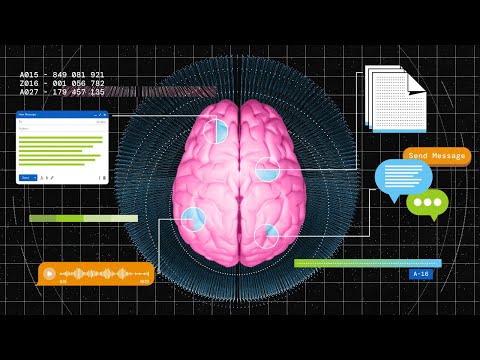
What's really happening when AI enables active systems instead of passive storage? The common story is second brains are just better note-taking — but the reality is more complicated.
In this video, I share the inside scoop on building an AI second brain with Slack, Notion, Zapier, and Claude or ChatGPT:
- Why traditional storage systems fail for 19 out of 20 people
- How AI loops classify, route, and surface information automatically
- What eight building blocks make second brain systems actually work
- Where engineering principles translate into no-code automation for non-engineers
Chapters:
00:00 - Introduction: Why Your Brain Needs a Second Brain
02:18 - What Changed in 2026: Active vs Passive Systems
04:34 - The AI Loop: Classification, Routing, and Surfacing
05:54...
Show More
What's really happening when AI enables active systems instead of passive storage? The common story is second brains are just better note-taking — but the reality is more complicated.
In this video, I share the inside scoop on building an AI second brain with Slack, Notion, Zapier, and Claude or ChatGPT:
- Why traditional storage systems fail for 19 out of 20 people
- How AI loops classify, route, and surface information automatically
- What eight building blocks make second brain systems actually work
- Where engineering principles translate into no-code automation for non-engineers
Chapters:
00:00 - Introduction: Why Your Brain Needs a Second Brain
02:18 - What Changed in 2026: Active vs Passive Systems
04:34 - The AI Loop: Classification, Routing, and Surfacing
05:54 - The Tech Stack: Slack, Notion, Zapier, Claude/ChatGPT
09:16 - Eight Building Blocks of a Second Brain System
09:48 - Building Block 1: The Drop Box (Frictionless Capture)
10:50 - Building Block 2: The Sorter (AI Classification)
11:37 - Building Block 3: The Form (Schema and Data Structure)
12:52 - Building Block 4: The Filing Cabinet (Memory Store)
13:52 - Building Block 5: The Receipt (Audit Trail)
14:48 - Building Block 6: The Bouncer (Confidence Filter)
15:54 - Building Block 7: The Tap on the Shoulder (Daily Nudges)
17:28 - Building Block 8: The Fix Button (Easy Corrections)
18:32 - Principle 1: One Reliable Human Behavior
19:10 - Principle 2: Separate Memory, Compute, and Interface
20:47 - Principle 3: Treat Prompts Like APIs
21:32 - Principle 4: Build Trust Mechanisms
22:12 - Principle 5: Default to Safe Behavior
22:42 - Principle 6: Small, Frequent, Actionable Outputs
23:04 - Principle 7: Use Next Action as Execution Unit
23:52 - Principle 8: Prefer Routing Over Organizing
24:32 - Principle 9: Keep Categories Painfully Small
25:29 - Principle 10: Design for Restart, Not Perfection
26:08 - Principle 11: Build Core Loop, Then Add Modules
26:38 - Principle 12: Optimize for Maintainability Over Cleverness
27:12 - Step-by-Step Setup Guide Walkthrough
29:35 - What It Feels Like When It's Working
For the first time in human history, you can build systems that work while you sleep — classifying thoughts, closing open loops, and nudging you toward what matters without requiring engineering skills.
Subscribe for daily AI strategy and news. For deeper playbooks and analysis: https://natesnewsletter.substack.com/
#YouTubeCategory: Entertainment
Show Less
.png?locale=en "Created by CourseChunks App")




No comments yet. Be the first to comment!